Ten years, one visit a year.
Every house we complete comes with a ten-year care agreement at no additional fee. Once a year somebody from this office walks the building, looks at the things that go wrong in buildings, and writes you a short honest report.
Two reasons, and only one of them is generous.
The first is the obvious one: a small failure found in year three costs a fraction of the same failure found in year eight, and a building that is looked at annually simply lasts longer.
The second is self-interested, and it is the reason the agreement is free. Most architects never learn how their own details behave, because they never go back. We go back forty-one times a year, and what we find changes what we draw.
It is not a warranty and we are careful never to describe it as one. It is a survey, a conversation and a report.
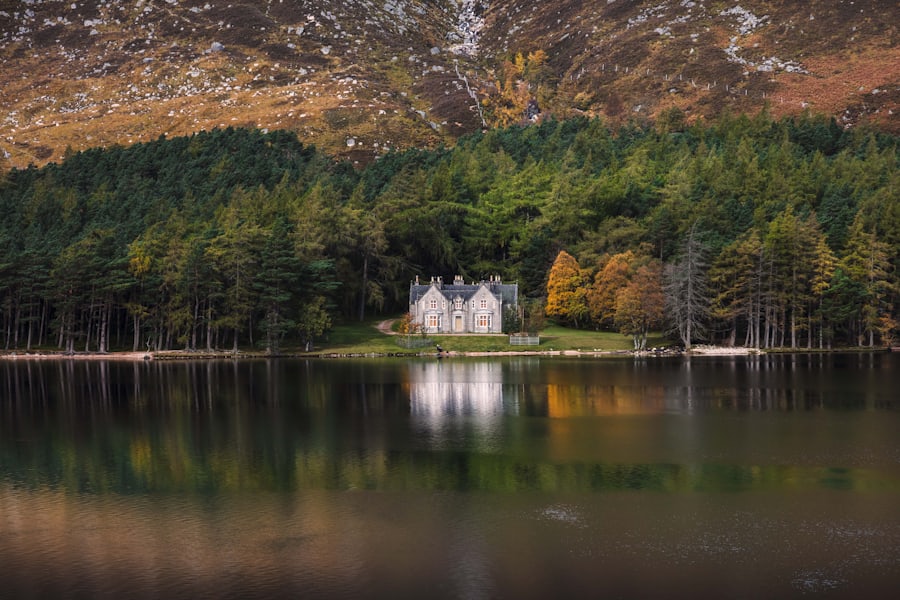
Glenmara Lodge is in year three of its agreement. The annual walk takes most of a day, because getting there takes most of a day.
Six things, plus your list.
An hour or two on site, then a report of two or three pages within a fortnight. No jargon and no photographs of things that are fine.
01
Roof, gutters and rainwater
Where nearly every serious building failure begins. Checked from a ladder, not from the ground with binoculars.
02
Pointing and external joinery
Movement, open joints, paint failure on cills and the state of any lime work we specified.
03
Moisture and ventilation
Readings in the places we expected to be difficult, compared against the previous years.
04
Ironmongery and moving parts
Doors that have dropped, windows that have stiffened, and anything we asked a joiner to make.
05
Services, visually
Not a test or a certificate, an eye on anything that has been altered or has started to leak.
06
Your own list
The things you have noticed and written down. Usually the most useful part of the visit.
Three things we stopped drawing.
Published because a practice that never admits a detail failed is a practice that has not been back to look.
A rainwater detail we abandoned
We used to run a concealed gutter behind a parapet on flat-roofed extensions. Three separate ten-year reports found the same slow failure at the outlet. We now run it externally and accept the visible downpipe.
A paint specification we changed
A modern water-based eggshell we liked failed on south-facing external joinery within six years on two houses. We went back to a traditional oil-based system for anything facing the sun.
A junction we now draw differently
Where a new floor slab met retained brickwork we detailed a rigid connection. In two buildings the movement showed as a hairline crack on a plaster reveal. It is now a designed movement joint with a shadow gap.
What it is not.
It is not a warranty, an insurance product, or a guarantee of any kind. It does not oblige us to pay for remedial work, and it does not extend anyone's statutory liability.
It does not replace a gas safety check, an electrical inspection or a structural engineer's report. Where the report says you need one of those, that is precisely what it says.
If we cease to practise, the agreement ends. We would tell you.